-
 “S” is for Stackhouse, Eunice Temple Ford (1885-1980). Educator, clubwoman.
 -
 “S” is for Stackhouse, Eunice Temple Ford (1885-1980). Educator, clubwoman.
 -
“B” is for Briggs v. Eliott (1954). Briggs v. Elliot was one of five cases, collectively entitled Brown et al. v. Board of Education of Topeka, Shawnee County Kansas, et al., argued before the United States Supreme Court.
-
“B” is for Briggs v. Eliott (1954). Briggs v. Elliot was one of five cases, collectively entitled Brown et al. v. Board of Education of Topeka, Shawnee County Kansas, et al., argued before the United States Supreme Court.
-
“R” is for Rock Hill Movement. Following the 1955 bus boycott in Montgomery and the 1960 lunch-counter sit-ins in Greensboro, African Americans in Rock Hill took the lead in energizing the civil rights movement in South Carolina.
-
“R” is for Rock Hill Movement. Following the 1955 bus boycott in Montgomery and the 1960 lunch-counter sit-ins in Greensboro, African Americans in Rock Hill took the lead in energizing the civil rights movement in South Carolina.
-
 When the 11- and 12-year-olds on the Cannon Street YMCA all-star team registered for a baseball tournament in Charleston, South Carolina, in July 1955, it put the team and the forces of integration on a collision. White teams refused to take the field with the Cannon Street all-stars, the first Black Little League team in South Carolina.The Cannon Street team won two tournaments by forfeit. If they won the regional tournament in Rome, Georgia, they would have advanced to the Little League World Series. But Little League officials ruled the team ineligible to play in the tournament because they had advanced by winning on forfeit and not on the field, denying the boys their dream. This became a national story for a few weeks but then faded and disappeared altogether as Americans read of other civil rights stories, including the horrific killing of 14-year-old Emmett Till.Chris Lamb, author of The 1955 Cannon Street YMCA All-Stars and Little League Baseball’s Civil War (2022, University of Nebraska Press), and John Rivers, who played shortstop on the All-Stars, join Walter Edgar to tell the story of the Cannon Street all-stars.
 -
When the 11- and 12-year-olds on the Cannon Street YMCA all-star team registered for a baseball tournament in Charleston, South Carolina, in July 1955, it put the team and the forces of integration on a collision. White teams refused to take the field with the Cannon Street all-stars, the first Black Little League team in South Carolina.The Cannon Street team won two tournaments by forfeit. If they won the regional tournament in Rome, Georgia, they would have advanced to the Little League World Series. But Little League officials ruled the team ineligible to play in the tournament because they had advanced by winning on forfeit and not on the field, denying the boys their dream. This became a national story for a few weeks but then faded and disappeared altogether as Americans read of other civil rights stories, including the horrific killing of 14-year-old Emmett Till.Chris Lamb, author of The 1955 Cannon Street YMCA All-Stars and Little League Baseball’s Civil War (2022, University of Nebraska Press), and John Rivers, who played shortstop on the All-Stars, join Walter Edgar to tell the story of the Cannon Street all-stars.
-
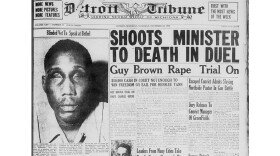 In this week's episode of Walter Edgar's Journal, Richard Gergel details the impact of the 1946 blinding of Sergeant Isaac Woodard on both President Harry S. Truman and Judge J. Waties Waring, and traces their influential roles in changing the course of America's civil rights history.Woodard, a returning, decorated African American veteran of World War II, was removed from a Greyhound bus in Batesburg, South Carolina, after he challenged the bus driver’s disrespectful treatment of him. Woodard, in uniform, was arrested by the local police chief, Lynwood Shull, and beaten and blinded while in custody.
 -
In this week's episode of Walter Edgar's Journal, Richard Gergel details the impact of the 1946 blinding of Sergeant Isaac Woodard on both President Harry S. Truman and Judge J. Waties Waring, and traces their influential roles in changing the course of America's civil rights history.Woodard, a returning, decorated African American veteran of World War II, was removed from a Greyhound bus in Batesburg, South Carolina, after he challenged the bus driver’s disrespectful treatment of him. Woodard, in uniform, was arrested by the local police chief, Lynwood Shull, and beaten and blinded while in custody.

© 2026 South Carolina Public Radio

Play Live Radio
Next Up:
0:00
0:00
Available On Air Stations


