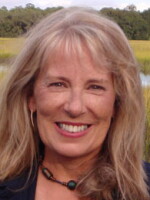
This week Bobbi Conner talks with Dr. Andreana Benitez about research regarding older adults and cannabis use. Dr. Benitez is a Professor of Health Sciences and Research and Neurology at MUSC.
TRANSCRIPT:
Conner: I'm Bobbi Conner for South Carolina Public Radio with Health Focus here at the radio studio for the Medical University of South Carolina in Charleston. Research is underway in South Carolina to evaluate if cannabis use may affect memory and thinking skills in older adults who use cannabis on a regular basis. Doctor Andreana Benitez is here to talk about the details of this research. Doctor Benitez is a Professor of Health Sciences and Research and Neurology at MUSC. Doctor Benitez, tell us an overview of how common cannabis use is in older adults in the U.S..
Dr. Benitez: Cannabis use among older adults has increased dramatically in the United States over the past decade. These days, it's estimated that about 7 to 12% of older adults currently use cannabis.
Conner: South Carolina has not legalized marijuana for medical or recreational purposes, meaning that cannabis use is illegal in our state.
Dr. Benitez: That's right. But older adults are using cannabis at increasing rates across the United States, regardless of differences in state laws. Use is growing most rapidly among older women and people with higher education and income, and those with chronic health conditions such as pain, insomnia or anxiety.
Conner: Tell us about the research that you've been involved in related to cannabis use in older adults.
Dr. Benitez: I started doing cannabis research because of what I was seeing in clinic, as a specialist who diagnoses Alzheimer's disease at the earliest stages. I'm also an Alzheimer's disease researcher. So, I knew of emerging studies that showed how cannabis improved memory and thinking in mouse and rat models of the disease. These experiments used low doses of tetrahydrocannabinol, or THC, which is the chemical in the cannabis plant that causes the high. Unlike in these studies, though, in clinic, I was starting to see more and more older adults who were concerned about their memory decline, but also using a lot of THC. Even though we know a lot about how cannabis can be harmful to brain development, we know extremely little about whether it can be harmful to brain aging. That's the research gap we're trying to fill right now.
Conner: What are some of the preliminary findings from your research?
Dr. Benitez: One major finding is that older adults who currently use cannabis express more concerns about their memory and thinking than former or never users. Because of this, we focus our research on cannabis users who use almost daily or who experience problems due to their use because as a subgroup, they may be at greater risk of worse health outcomes. We recently published a pilot study where we found that among these older users, men in particular, performed worse on tests of memory and thinking and showed signs of greater risk for stroke. Stroke-like changes in the brain are big contributors to Alzheimer's disease. So, we're currently doing a larger follow up study to verify these findings and look more closely at sex differences in these outcomes.
Conner: And how might the results from your research be helpful moving forward in research?
Dr. Benitez: Thanks to grants from the NIH, we're able to study whether things like new blood tests can shed further light on the risk for diseases like Alzheimer's disease. We are the only group in the country with funding to study these blood tests in cannabis using older adults. Alongside this research, we're also doing parallel experiments in cannabis exposed, aged rats, to see how chronic use might influence their behavior or brain health. We hope that all of these discoveries will help clarify the impact of cannabis use on the aging brain, and figure out whether these blood tests of Alzheimer's disease can be used effectively among older cannabis users.
Conner: Doctor Benitez, thanks for talking with us about this research.
Dr. Benitez: Thank you for having me.
Conner: From the radio studio for the Medical University of South Carolina in Charleston, I'm Bobbi Conner for South Carolina Public Radio.
Health Focus transcripts are intended to accurately represent the original audio version of the program; however, some discrepancies or inaccuracies may exist. The audio format serves as the official record of Health Focus programming.