-
 Descendents of the Charleston man who inspired the famed opera "Porgy and Bess" gather for the unveiling of a historical marker in front of the house where it was penned.
 -
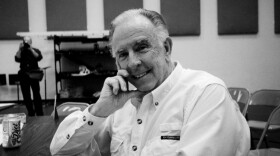 Ahead of a centennial celebration at Carnegie Hall on June 20th, conductor and Floyd protégé Christopher James Ray offers insights into the life, work, and legacy of a South Carolinian called the "Father of American Opera."
 -
 This week we’ll be talking about the life and career of the man that many call the Father of American opera: Carlisle Floyd. Our guests are Floyd's neice, Jane Matheny, and his biographer, Thomas Holliday. A native of Latta, South Carolina, Carlisle Floyd became a professor of composition at Florida State University in 1947. His magnum opus, Susannah, was first performed in 1955 and became the most performed American opera, second to Gershwin’s Porgy and Bess.Floyd was both composer and librettist of his operas, which typically portrayed themes common to rural America, especially the post-Civil War South. 2026 in the centennial of Carlisle Floyd’s birth and today we’ll talk with our guests about his long life and his career.
 -
 Ellen Schlaefer, director of Opera Studies at the University of South Carolina School of Music, shares insights into Gian Carlo Menotti's Pulitzer Prize-winning opera ahead of three performances Nov. 7-9.
 -
 Ahead of his first time conducting the full opera, Charleston Opera Theater Music Director Wojciech Milewski gives insights into the Puccini masterwork that ignited his passion for the art form.
 -
 Soprano Nicole Heaston shares insights into the musically and psychologically intense title role she's singing in Charleston through June 10th.
 -

-

-
No piece of music is ever just “about” any one thing. In Mozart’s opera Don Giovanni, Don Giovanni stands beneath Donna Elvira’s window and sings the aria Deh vieni alla finestra, “Come to the window, O my treasure.” It’s a serenade, a love song, and a very beautiful one. But there’s one big problem: it’s a fake.
-
No piece of music is ever just “about” any one thing. In Mozart’s opera Don Giovanni, Don Giovanni stands beneath Donna Elvira’s window and sings the aria Deh vieni alla finestra, “Come to the window, O my treasure.” It’s a serenade, a love song, and a very beautiful one. But there’s one big problem: it’s a fake.

© 2026 South Carolina Public Radio

Play Live Radio
Next Up:
0:00
0:00
Available On Air Stations


