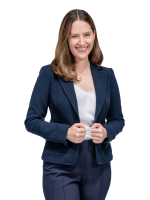
SCETV'S Maayan Schechter asks State Election Commission Executive Director Conway Belangia about what voters need to know before they vote in the November midterm elections.
TRANSCRIPT
MAAYAN SCHECHTER, HOST: South Carolina's Election Commission says it is readying for big turnout in the Nov. 3 midterm elections. The state's two weeks of no-excuse early voting started on Monday. Joining me to discuss what voters need to know before Election Day is Conway Belangia, a veteran elections official, with 50-plus years of experience and who officially became the state's permanent elections director in April. Conway, thanks for chatting with me.
CONWAY BELANGIA: Oh, absolutely.
SCHECHTER: Before we get started, I want to note in your short tenure over the State Election Commission that you've had a rather full plate. Let's start at the beginning. There was leadership turnover. That's what brought you here in the first place. You walked into an agency dealing with a request from the Department of Justice over sharing voter data registration information. At the end of session, lawmakers tried to do mid-decade redistricting right before the primary election. And then there was the sudden death of Sen. Lindsey Graham, triggering a special election and a special primary election runoff.
Am I missing anything?
BELANGIA: Oh no, it's been a wild ride, sort of like the state fair, rollercoaster ride. But everything has fallen together, and we've met the challenges before us and things are moving right along, moving into this election in November.
SCHECHTER: Early voting started, as I mentioned, on Monday. It ends on Oct. 31. What do you want voters to know right now?
BELANGIA: Early voting is open to every properly registered elector in the state of South Carolina can vote early for no reason at all. They can show up at one of the many early voting sites, but you have to be in your county of registration. But you can show up at any of the sites in your county, receive your ballot, cast your ballot, and you have met your civic duty of voting for the election. A lot of people are taking advantage of the early-voting process just to make sure they get it out of the way, make sure they don't have travel issues, whatever. And a lot of people, they really think they're avoiding long lines on Election Day. But in essence, you can run into long lines even to vote early.
Early voting means that, well, if you run into a long line, you can come back another day. On Election Day, you've got to cast your ballot that day because if you miss that, then you'll miss your opportunity to voice your opinion.
SCHECHTER: What is the expected turnout?
BELANGIA: Right now we have roughly 3.5 million people registered to vote. We expect turnout to be about 2 million people on a good, decent off-year election. If today's (Oct. 19) early voting is any indication, or the early voting that's taking place is any indication, we may get to 2.2 million, 2.3 million voters casting a ballot for this election. And that's excellent for a mid-year function.
But we expect a good turnout, and it's started off like gangbusters this morning (Oct. 19). We remind people early voting is open 8:30 a.m. to 6 p.m., and that includes Saturday. And so that'll be true this week right through Halloween. Halloween will be the last time you can vote early. And then of course not available on Monday before the election. And of course, Election Day being Nov. 3, polls are open 7 a.m. to 7 p.m.
Make sure that if you're running close, you've got to be in line at 7 p.m. If you're in line, you'll be able to cast your ballot. You walk up there at 7:01 p.m., you've missed your opportunity. Don't be late. Be on time. Be early and vote.
SCHECHTER: Good rule of thumb. I guess I should ask this since early voting does end on Oct. 31. Can you wear your costume to cast your ballot?
BELANGIA: Always keep in mind that we do check your photo, and your photo underneath your mask is the ID. You're going to have to remove your mask to prove who you are. Don't think you're going to walk in there as a Lone Ranger and leave your mask on. You're going to have to take it off. Or if you have a more elaborate mask or if you are painted, I think of the Joker, you may have to jump through an extra hoop or two by proving who you are by your signature, which is a possibility. But keep in mind that voting is secured, and we want to make sure that only proper people are casting their ballot and photo ID is one of those functions. So if in doubt, take it off.
SCHECHTER: We've already heard from a couple of counties a week or so ago that there were poll worker shortages. I know that there are continuous efforts being made to fill those gaps before Election Day. Do you have any concerns in that area?
BELANGIA: No, I don't have concerns. There are some counties that could always use some more people, some more people to get trained to work the polls. We'll do everything we can to assist them in reaching that goal. But the people who are signing up for this have to be properly trained before they can work the polls. You can't wait until the day before and say, 'I want to be a poll worker.' So you got to do it early so you can get properly trained. Most counties have pretty much finished their training and they're now getting those people assigned to their precincts for the major election.
Smaller counties that need help, they can do training through this week and maybe even some of next week and get people assigned where it's a small county and small distances. Larger counties and larger numbers make up for a different atmosphere. But we can always use good people to help conduct elections. Most of the time they're neighbors and friends. Keep this in mind, while they're an election official, they are your friends and neighbors. Don't throw rotten tomatoes or eggs or anything like that at them, because they're just doing a duty and they're following state law, we make sure of that.
And that's part of some of the process of training. They have to follow state law, and they do. And we don't have any major issues with elections in South Carolina, and thank goodness, because we do have very dedicated people who help out, and we will always, always take more people dedicated to helping us conduct elections.
SCHECHTER: Are there any particular counties in the state where you feel like there needs to be more attention, where folks really should be signing up at this point?
BELANGIA: It's across the board. Our larger counties are better at recruiting and training, smaller counties are not. I talked with Anderson (County) recently, and while they're at a place where they can conduct the election comfortably, they can always use more people, but that's true across the board. It's not any specific region that really needs more than others.
SCHECHTER: We were just talking about this. It's a paid gig. You get a little bit of money out of it. There have been efforts over the last several years to bump up that pay. We even saw a new law passed this year to exempt poll worker pay from state income taxes. Do you plan to ask the Legislature again to raise pay to see if that maybe, or just anything else to entice people to sign up early?
BELANGIA: We always try to bump it just a little bit. We'll ask the Legislature again as we always do. Hopefully they'll see fit to bump it just a little bit, because even a little bit helps. Keep in mind that if you talk about a $10 or a $15 or a $25 raise per day for a poll worker, that gets into millions of dollars across the state because we have over 20,000 poll workers. And you take a $10 increase, that's $200,000 right off the bat. It gets exponential.
But we will ask for a couple of different tweaks that will help us possibly recruit poll workers for a different segment of the day. Right now, a poll worker has to work from early in the morning to late at night. And we want to institute a few changes that would allow some people to work a half a day. But we have to have that continuous all-day function. But some people may have the opportunity and some counties may offer the opportunity for somebody to work a half a day in the future, but not for this November election. We have to do some tweaking of state law to be able to do that.
SCHECHTER: You mentioned election security. That's another issue that seems to come up every single cycle, whether it is just ballot security or, again, right when you started, the State Election Commission struck an MOU with the DOJ about sharing voter data. And part of that MOU, remind me, is that it included the requirement of some kind of encrypted software service that protected voter data. First off, do you have any concerns about election security? And then second, can you share any kind of update as it relates to that MOU?
BELANGIA: Our polling places are very secure, have been. State law is very clear on what poll workers can do and can't do. All of our machinery is standalone. Voting equipment is never hooked to an internet, never plugged into a phone line or anything. Our voter registration list now is connected, so we can update that really momentarily. Especially in early voting, if somebody goes to one site and votes, they can't go on the same day to another site, because it's already updated that they have already cast their ballot, so they can't vote twice. Same thing is basically true on Election Day. But our security system is really divided in voter registration and elections, and our election side is very, very secure. ,Our ballots are secured. We do audits to make sure that the number of ballots that are cast in a polling place match the number of votes being tabulated, and also matches the number of people who show up at that polling place. So it's a three-point check. And when we do that precinct by precinct.
Eventually we will look at every ballot. We (the State Election Commission) won't. We have an independent audit group. They will look at every ballot to look at every name on the ballot that a voter puts into the scanner. And they will tabulate the system to be sure that the tabulation is like it's supposed to be, part of the check. And so far, over the years, that has been just spot on. We hope to be able to turn that review process a little bit quicker in the future. You know, it's tweaking the system.
But we're real comfortable with our system, the way it operates and the checks and the balances and the testing that we do. I feel comfortable with that. We hope that the voters will feel comfortable as well, down to when you put your ballot into the scanner, we tell you to turn it face down. That's to protect the secrecy of your ballot so that nobody who may be standing around walking by, whatever, they can't see the top of your ballot to see maybe who you voted for on the top of your ticket or whatever. It just protects yours. But that scanner will read it upside down, right side up, backwards, forwards. And we test to make sure the scanners are doing that. We test and test and test, and we verify. And in the end, we verify over the entire state to make sure the system is working properly.
I am, and I've been in this business for many years, very, very pleased with the system we have right now and how it's operating.
SCHECHTER: And any update on the DOJ case you can share?
BELANGIA: The MOU that we entered into with DOJ, we did provide a voter file to DOJ. It went past the encryption standpoint. It went a few steps further in its protection of the Social Security number and all. That's not something we need anybody else to have access to. DOJ, we gave that information to them. We have not heard one word back from them, from the file that we submitted to them, unlike some other states that we hear about. But nothing concerning South Carolina. Unless we hear something, we will just continue on and do what we do, which is very good elections in South Carolina.
SCHECHTER: I hate to get ahead of myself and ahead of Nov. 3 here, but just looking ahead — assuming, knock on wood that nothing else occurs between now and Election Day and Election Day and the end of the year — but anything you plan on asking the Legislature or talking to them about in the next year? We obviously will have a new governor. Anything you plan on talking to the governor about as it relates to voting, the state agency election safety?
BELANGIA: The election system itself, be it the voter registration side or the election side, it's a system that needs to be updated as we go. We'll be asking the Legislature for helping us to update that system. We're still paying for the old purchase a few years ago, and that wasn't a cheap proposition. But we have a few things that we need to ask for this coming session. In fact, we start the budget process tomorrow (Oct. 20). And so we will ask for some tweaking, not only of our budget, but also tweaking of state law, where we understand that, well, this is not working really well, let's see if we can tweak it to make it better for voters and the voting experience so that they can cast their ballot a little bit easier. But again, with security and with the knowledge that we are not compromising the ability for voters to cast a proper ballot and to cast one secretly.
SCHECHTER: Anything else that I did not ask that you think is especially important for people to know about this election?
BELANGIA: Always remember that when you go to vote, make sure you take your your photo ID with you. By the time you get to the qualifying table, have that photo ID. Most people use the driver's license or the ID issued by DMV, or even a photo ID issued by the State Election Commission that has a picture on it. And then we get into things like passports, military ID, and that sort of thing. But always remember that it is a check and balance. It is a process where you have to check in. And if you don't have your proper information or your photo ID, things will slow down. Not only will they slow down for you, but they'll slow down people in line behind you and they may get mad. Let's hope not.
But also voters need to make sure that they are properly registered to vote at their current resident address. If you've moved, you need to make sure that that's corrected. if you move within your county, while that's not detrimental to casting a ballot, it is going to slow you down at the polling place. We'd much rather you have that corrected, even if it's the week before, get that thing corrected and let's make sure that you are able to cast a very quick, processed ballot and not have the hassle of going through an address change.
SCHECHTER: Well, I think I speak for everyone. I hope for all of us a smooth Election Day and early voting. Conway Belangia, the executive director of the State Election Commission, thank you so much for joining me.
BELANGIA: Thank you.
Editor's Note: This interview has been edited for clarity and length. The transcript text may be tweaked to correct errors or match updates to the audio recording. It was transcribed using an artificial intelligence service and checked by the reporter for accuracy after.